
India's historical focus on its continental borders has overshadowed its maritime ambitions, but that is changing quickly, notes Ajai Shukla.

The immediate need is to put more money in the hands of agriculture-based and rural households to improve their purchasing power, says S Mahendra Dev.
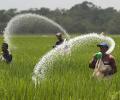
As the kharif season is setting in, India is scrambling to source fertilisers from the international market. It is set to sign long-term contracts - especially with Morocco and Latin American countries - to ensure steady flow of supplies. "We have to source fertilisers wherever it is available because crops have to be secured.

Among the major ones are fewer restrictions on market access for US medical device manufacturers, as well as access for other key products.

For all its claims to economic glory, the majority of India's population lives vulnerable lives, a situation that has only worsened over the past 15 years, to the extent that the government now fears to release economic data or even conduct a proper Census, notes Rathin Roy.

The most immediate challenge for growth is the disruption of the global economy brought about by the Ukraine war and related sanctions, the Covid shutdowns in China and the rising tide of inflation, points out Nitin Desai.
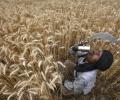
'Obviously, MSP hike raises chances of a reduction in exports. Even without an MSP hike, India's exports of a number of agri-commodities, like sugar, were unviable in the overseas markets.'

'In the long run, the boost to farmers' incomes must come from technological breakthroughs,' says Pratap S Birthal and Digvijay S Negi.

'It is building the country's infrastructure, and delivering it very efficiently.'

Without directly referring to the farmers' agitation, which entered the 17th day on Saturday, Modi said agriculture reforms as part of government efforts are aimed at removing roadblocks, and the new laws will also bring in technology and investment in the sector.

It is largely due to his vision and efforts that we have almost quadrupled our per capita milk availability in the last 40 years, points out Shailesh Dobhal.
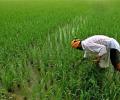
The law will be applicable not only to crops but also livestock, dairy and poultry products

When agricultural holdings get fragmented over years, the state government has the power to step in and help farmers pool their land parcels for improving land productivity, after which the pooled land is divided up into larger plots. Instead of the fragments they hold, a farmer gets a single contiguous patch of an equal size. But, it is done only for agricultural holdings. In Kot village, however, the consolidation has been ordered for the entire village land, including the hilly forested commons, which are already pooled. This is not the first time that the Haryana government has attempted such a consolidation of Kot common lands.

While consumers feel that petrol pinches directly, diesel hurts indirectly, as it is an input in almost all the goods and services we use.

'When you need to revive the economy, when you need to revive aggregate demand, you cut taxes.' 'But what's this government doing?' 'It's increasing taxes for the middle class and the vast majority of the poor on fuel, which has a ratchet effect on most other products.'
Lack of literacy is compromising the ability of farmers in India and China, two of the world's most populous countries with the smallest farm size, to raise productivity without losing soil fertility, says Kunal Bose.

'While the farmers are reeling under a huge debt burden, crop loss due to locust attacks and erratic rainfall, the state is also facing a COVID-19 challenge.' 'In this situation, you have Congress and BJP MLAs trying to outwit each other in a game of thrones'
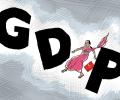
India's economy is expected to grow 7.5-8 per cent this fiscal year with exports playing a key role in the country's success story, CII president TV Narendran said on Monday. However, he said the country needs to remain prepared for any fallout of next wave of COVID-19 pandemic, and the impact of the ongoing Russia-Ukraine war. "We are confident that the economy can retain a high growth trajectory this year. "So, we are very optimistic on the export front. "Exports will be a key component of India's success story going forward," Narendran said.

According to exporters, withdrawal of incentives under GSP would impact India's export worth $5.6 billion to the US.

Finance Minister Nirmala Sitharaman is likely to strike a fine balance between being fiscally prudent and growth supportive when she presents her fourth straight budget on Tuesday, which is expected to have plans to boost spending to revive investment and create jobs. The Budget for the fiscal year starting April 1, 2022 is likely to raise spending on infrastructure to set the economy on a firmer footing. The stage for the Budget presentation was set by the Economic Survey stating that the government has the fiscal space to do more to support the economy that is forecast to grow at a healthy 8-8.5 per cent growth in the 2022-23 fiscal.

Moving the Motion of Thanks to the President's address in the upper house, BJP member Bhubaneswar Kalita said the government respects farmers. He said the government has given new rights to farmers through these new farm laws and none of their rights or facilities have been taken away.

Modi also said that presently a 'new trend' is being seen in the country where protests are based on creating doubts through misinformation while union ministers urged farmers not to have any misconceptions about the three agriculture reform legislations.

A clear message was that the ongoing seven-decade-old model of agriculture, based on extensive reliance on subsidy by the government at every stage, was not going to work, said NITI Aayog vice-chairman Rajiv Kumar.

It is important to increase employment in general. It is even better to increase good quality jobs. Strategically, it is important to move people from farms to factories to improve overall labour productivity. It is important to improve job opportunities for women, for urbanites and for the educated. The Budget does not contain ideas to do any of this, points out Mahesh Vyas.

A ramp-up in COVID-19 vaccination, healthy advance estimates of kharif (summer) crop and faster government spending were the factors which led to the revision, the agency said in a statement. It can be noted that after the 7.3 per cent contraction in 2020-21, there were expectations of a higher growth number in 2021-22.
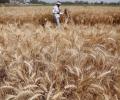
The decision will help farmers earn an additional income of Rs 62,635 crore

Emerging markets such as India have always run higher inflation rates than developed economies such as the US and countries of Western Europe. But for the first time in the past 30 years, the US reported a higher consumer price inflation (CPI) rate than India in five consecutive months. The US reported a CPI rate of 7.5 per cent in January 2022 against 6.01 per cent in India and analysts expect the trend to continue for at least a few months more

Beijing will be intently watching Washington's response for any hint of weakness. Xi Jinping, who feels China has a limited window of strategic opportunity, will be emboldened to take additional initiatives in the Indo-Pacific and specifically against India and Taiwan, warns Jayadeva Ranade, the former senior RA&W officer and China expert.

Since 2014, many of Mohan Bhagwat's speeches have acted as cues for government policy.
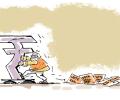
'We have promised to ensure reduced tax rates.'

India's appetite for imported crude oil may wane in fiscal year (FY) 2023 from record levels in pre-pandemic 2019-20 fiscal as higher oil prices, a spillover from the conflict in Ukraine, and increasing use of biofuels affect domestic demand for petroleum products. Brent crude surged to a nine-year high, shy of a July 2008 record $147.50 a barrel, before declining to around $100 a barrel - but the volatility in commodity rates will slow global economic growth and use of fuels. Demand for all oil products may grow at only 2-3 per cent in FY23, slower than the current fiscal and nearly half the 5.5 per cent growth estimated by the petroleum ministry, according to industry officials.

The McKinsey report said faster employment growth at 12 million non-farm jobs annually is needed in the post-Covid period till 2029-30, up from just four million created each year between 2012 and 2018.

India has called the remarks by foreign leaders on protests by farmers as "ill-informed" and "unwarranted" as the matter pertained to the internal affairs of a democratic country.
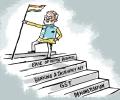
India's GDP expanded 13.5 per cent in the April-June quarter, the quickest pace in a year, to retain the world's fastest growing economy tag but rising interest costs and the looming threat of a recession in major world economies could slow the momentum in the coming quarters.

As the Reserve Bank maintained a status quo on key policy rates, analysts said higher demand due to supply constraints will not allow inflation to ease as quickly as anticipated and the apex bank may be forced to increase rates once more by the year-end.

'A sustainable growth rate of 8 per cent is evidently some distance away,' says T N Ninan.

The petitions alleged that these laws would dismantle the Agricultural Produce Market Committee system intended to ensure fair prices for farm products

"We now realise that the so-called farmer agitation hardly remains a farmers' agitation. It has almost got infiltrated by Leftist and Maoist elements, a flavour of which we saw over the last two days when there were extraneous demands to release people who have been put behind bars for anti-national (and) who have been put behind bars for illegal activities," Goyal, the Minister for Railways, Commerce and Industry and Food and Consumers Affairs, said at FICCI's annual meeting.

The Union Budget announcement of a minimum support price (MSP) that will be 50 per cent more than the cost of production has started a debate on the calculation of cost. Ramesh Chand, member, NITI Aayog, speaks to Sanjeeb Mukherjee on this and related issues.

'To simply let the rupee depreciate to any level according to market forces will not be in the country's interests.'
